
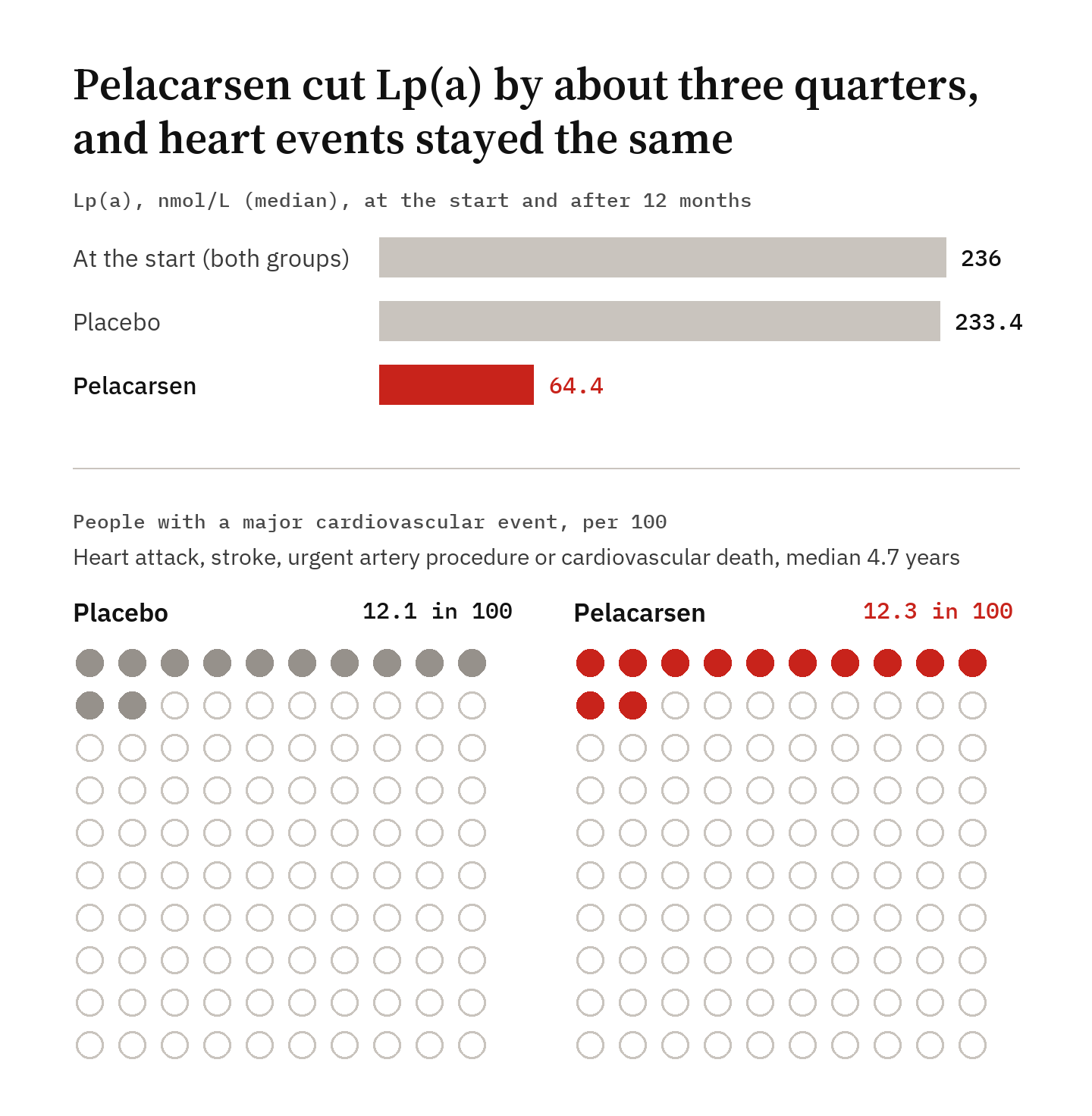
Lipoprotein(a), usually written Lp(a), is a cholesterol-carrying particle in the blood whose level is set almost entirely by the genes a person inherits, and genetic studies have pointed to it as a cause of heart attacks and strokes. In November 2026, a trial in 8,350 people who already had cardiovascular disease and high Lp(a) reported what happened when a monthly injection called pelacarsen kept that particle about three quarters below the level in a placebo group. Over a median of 4.7 years, 12.3% of people on the drug and 12.1% on placebo had a heart attack, a stroke, an urgent artery-opening procedure or a cardiovascular death, which is about 12 in every 100 people in each group.
The result lands on a large number of people. A 2022 consensus statement from the European Atherosclerosis Society estimated that about 1.4 billion people worldwide have high Lp(a). The same day brought ZEUS, the anti-inflammatory trial examined on the podcast, in which a different blood marker fell steeply and events again did not move. Taken together, the two trials raise a plain question about how much a blood number that a drug can move tells anyone about protecting the heart, and the Lp(a) case answers it with unusual clarity, because here the genetics made a specific, testable prediction.
Contents
- Why genetics made this particle a prime suspect
- What the trial tested and what it found
- The patients with the deepest drop did no better
- The same pattern has appeared before
- How large a drop the genetics said was needed
- What the next trials will test
- What this means for you
The inflammation side of this story, from the first plaque studies to ZEUS, is the subject of this episode of The Active Site.
Why genetics made this particle a prime suspect
Lp(a) is built like a particle of low-density lipoprotein (LDL), the cholesterol carrier that lodges in artery walls, with one addition: a large protein called apolipoprotein(a) is tethered to it. More than 90% of the difference in Lp(a) between one person and the next is inherited, which is why it is usually described as a level a person carries for life rather than one they can change with diet or exercise. It is measured in nmol/L (nanomoles per liter), a count of particles in a liter of blood.
The strongest case against it came from the kind of genetic evidence the episode used to clear C-reactive protein (CRP), the inflammation marker. That method, Mendelian randomization, treats the genes people happen to inherit as a lifelong natural experiment: if inheriting a higher level of something also brings higher risk, the substance is probably a cause rather than a bystander. Inherited CRP failed that test. Lp(a) passed it clearly, and the consensus panel described "strong evidence for a causal association" with cardiovascular disease.
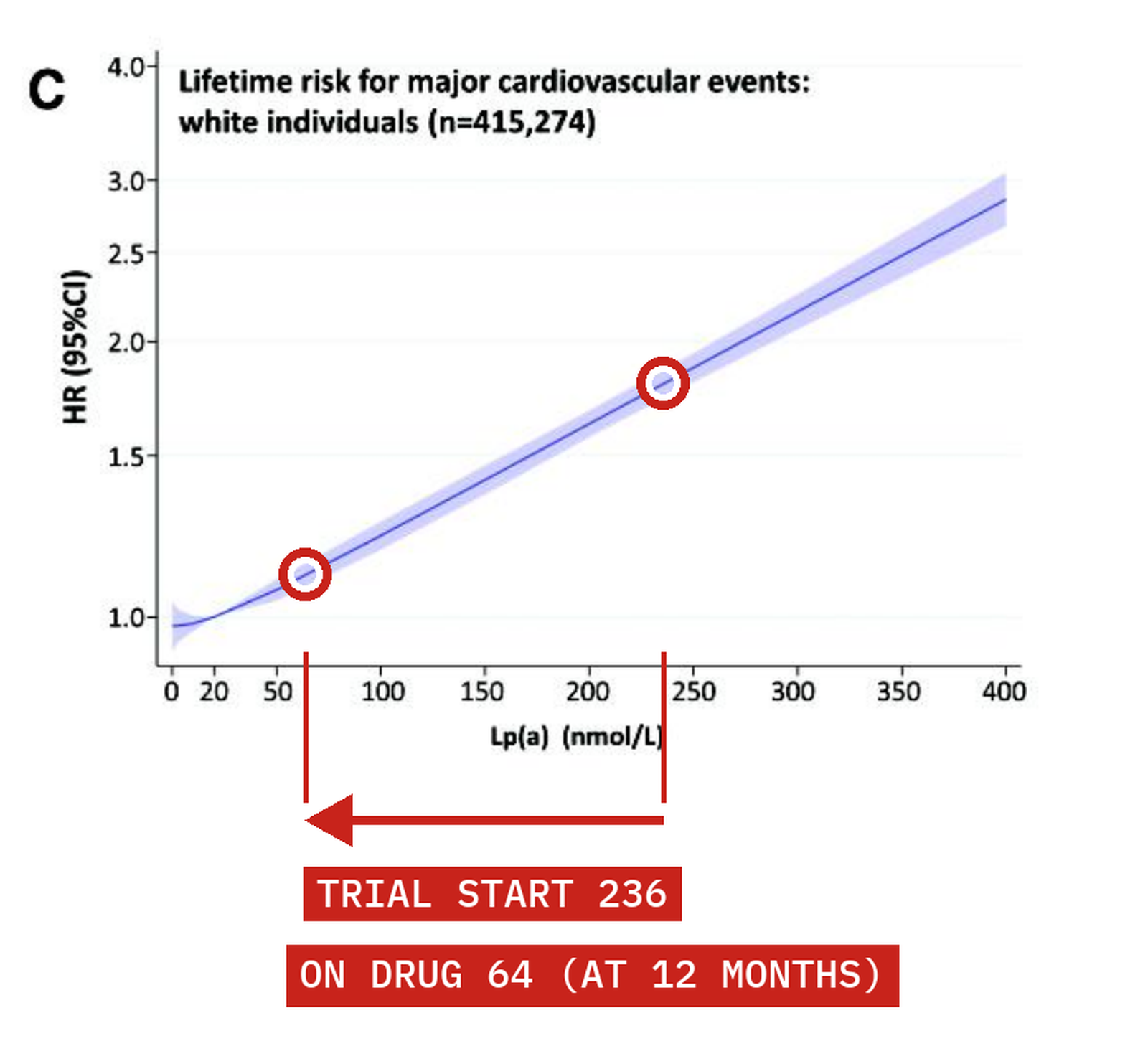
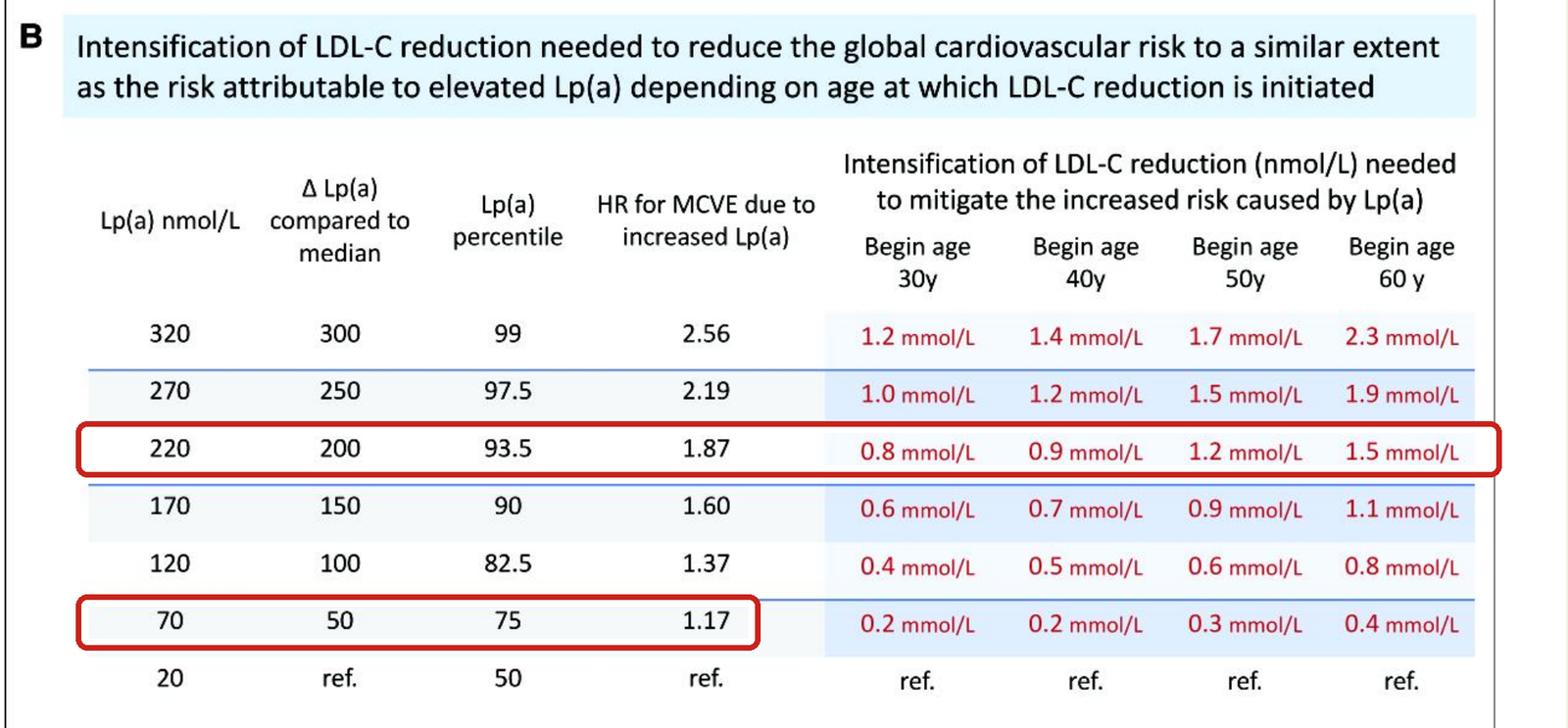
In UK Biobank, a large study of British adults, about 1 in 10 White participants (9.8%) had an Lp(a) of 170 nmol/L or higher, and the risk of major cardiovascular events rose in a straight line as Lp(a) rose, measured against a person at the population median of about 20 nmol/L. The consensus panel turned that line into a table. A person at 220 nmol/L, close to where the trial's patients started, carried about 1.9 times the risk of a person at 20 nmol/L with otherwise equal risk factors, while a person at 70 nmol/L, close to where the drug brought them, carried about 1.2 times the risk. On paper, moving a patient from the first row to the second should have removed most of the extra risk that Lp(a) adds.
What the trial tested and what it found
Lp(a)HORIZON enrolled people who already had cardiovascular disease and an Lp(a) of at least 70 mg/dL (milligrams per deciliter, a weight-based measure that does not convert exactly into nmol/L). Their average age was 59.7, and 27.0% were women. Of the 8,350 randomized, 8,322 were included in the main analysis: 4,157 received 80 mg of pelacarsen injected under the skin each month and 4,165 received a matching placebo. Pelacarsen is an antisense drug, a short strand of genetic code that instructs the liver to make less apolipoprotein(a), and the trial counted cardiovascular deaths, nonfatal heart attacks, nonfatal strokes and urgent procedures to reopen heart arteries.
The drug did what it was designed to do. The median Lp(a) at the start was 236 nmol/L, and at 12 months it was 64.4 nmol/L on pelacarsen against 233.4 nmol/L on placebo, about three quarters lower. The events did not follow. A first major cardiovascular event occurred in 511 people on the drug (12.3%) and 503 on placebo (12.1%), and the p-value of 0.76 means that a gap this small could easily arise by chance alone. There was no clear difference between the groups.
People who started with the highest levels, 90 mg/dL or more, were the group in whom the genetics predicted the most benefit, and they had events at the same rate in both arms, 402 of 3,266 (12.3%) on the drug and 403 of 3,274 (12.3%) on placebo. Serious adverse events were, if anything, slightly less frequent on pelacarsen (37.3% against 41.1%), and so the result cannot be explained by harm canceling out a benefit. With more than 1,000 first events counted over nearly five years, this was not a small trial that ran out of time.
The patients with the deepest drop did no better
A trial result for a whole group can hide a benefit in the people who responded best, and the investigators examined that possibility in a set of companion analyses published the same day. They found no subgroup in which the drug looked protective. People whose Lp(a) fell by at least 170 nmol/L in the first three months, the median fall, had no fewer events than comparable people on placebo, and neither did people whose Lp(a) reached 69.5 nmol/L or lower.
Every other way of slicing the data agreed. Among people who stayed on treatment, events occurred in 9.1% on the drug and 10.4% on placebo, and among those treated without interruption, in 11.0% and 10.1%, and neither comparison showed a clear difference. Counting every event, including second and third ones, gave 644 on pelacarsen and 646 on placebo. There was no benefit in patients grouped by their starting Lp(a), their LDL cholesterol, their CRP or the time since their qualifying heart or artery event.
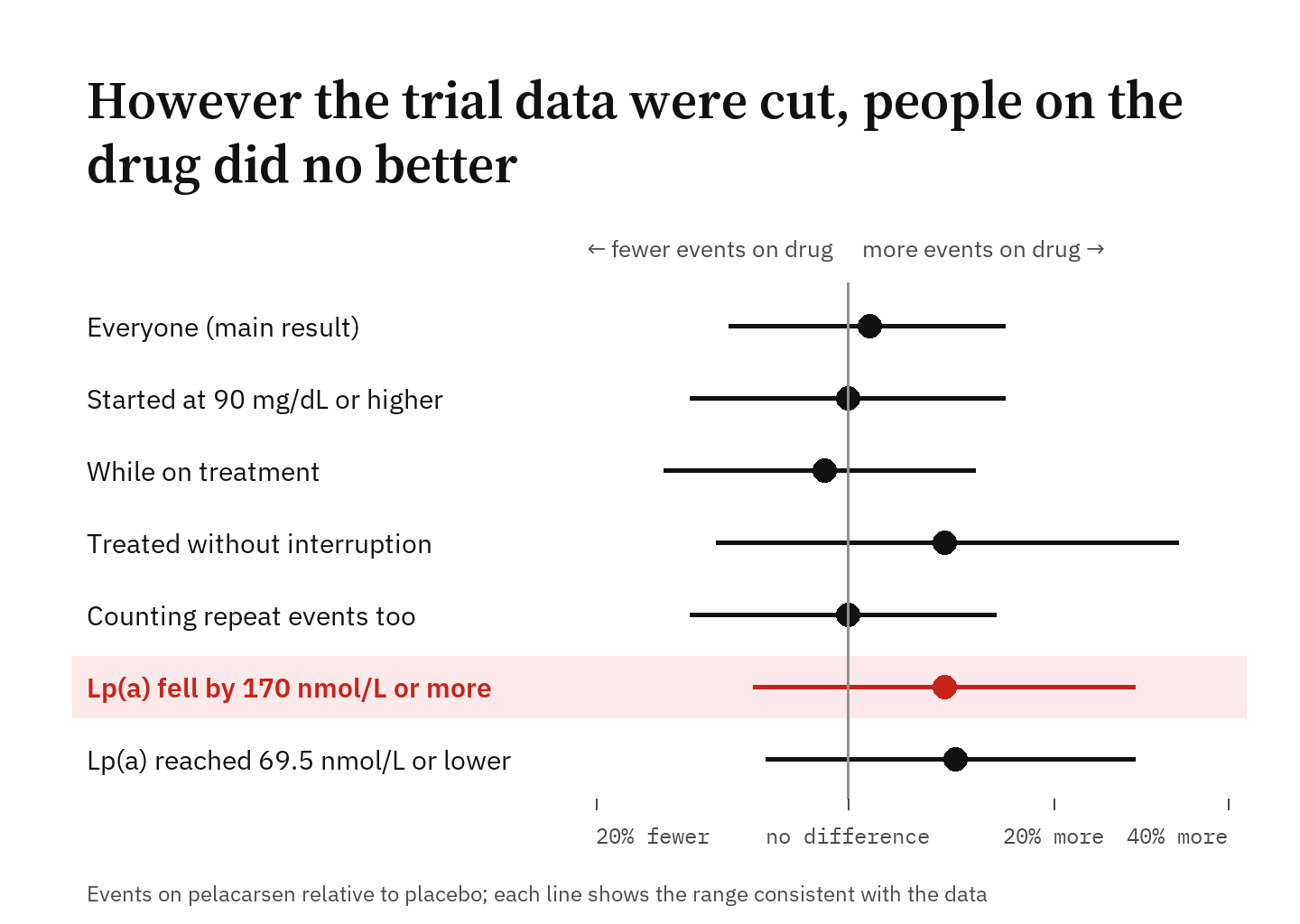
The analyses that sort people by how far their Lp(a) fell carry the same weakness the episode described in the CANTOS "responder" analysis, because they group patients by what happened after randomization. On their own they could not prove much in either direction. Here they point the same way as the randomized result, which removes the most hopeful explanation for a null trial: that the drug worked well in the people it reached and was diluted by those it did not.
The same pattern has appeared before
Cholesterol research has met this outcome before, with "good" high-density lipoprotein (HDL) cholesterol. In 2007, a trial of torcetrapib in 15,067 people at high risk raised HDL by 72.1% and lowered LDL by 24.9%, yet major cardiovascular events were more common on the drug, and deaths were about 58% more likely than on standard treatment alone. In 2012, dalcetrapib raised HDL by 31% to 40% (against 4% to 11% on placebo) in 15,871 people who had recently had a heart attack or unstable angina, and events occurred in 8.3% on the drug and 8.0% on placebo before the trial was stopped early because it had no realistic chance of showing benefit.
ZEUS, published online in the same journal on the same day as Lp(a)HORIZON, completed the set for inflammation. Ziltivekimab lowered CRP by 64 percentage points more than placebo (the difference between the two groups' median percentage changes), and major cardiovascular events occurred in 17.6% and 17.7% of patients. ZEUS also lowered Lp(a), by 29 percentage points more than placebo, but that was a post hoc analysis (one not planned in advance) limited to patients with measurable Lp(a), whose median starting levels were only 39 and 37 nmol/L, about a sixth of the level in Lp(a)HORIZON. It says nothing about Lp(a) lowering as a treatment.
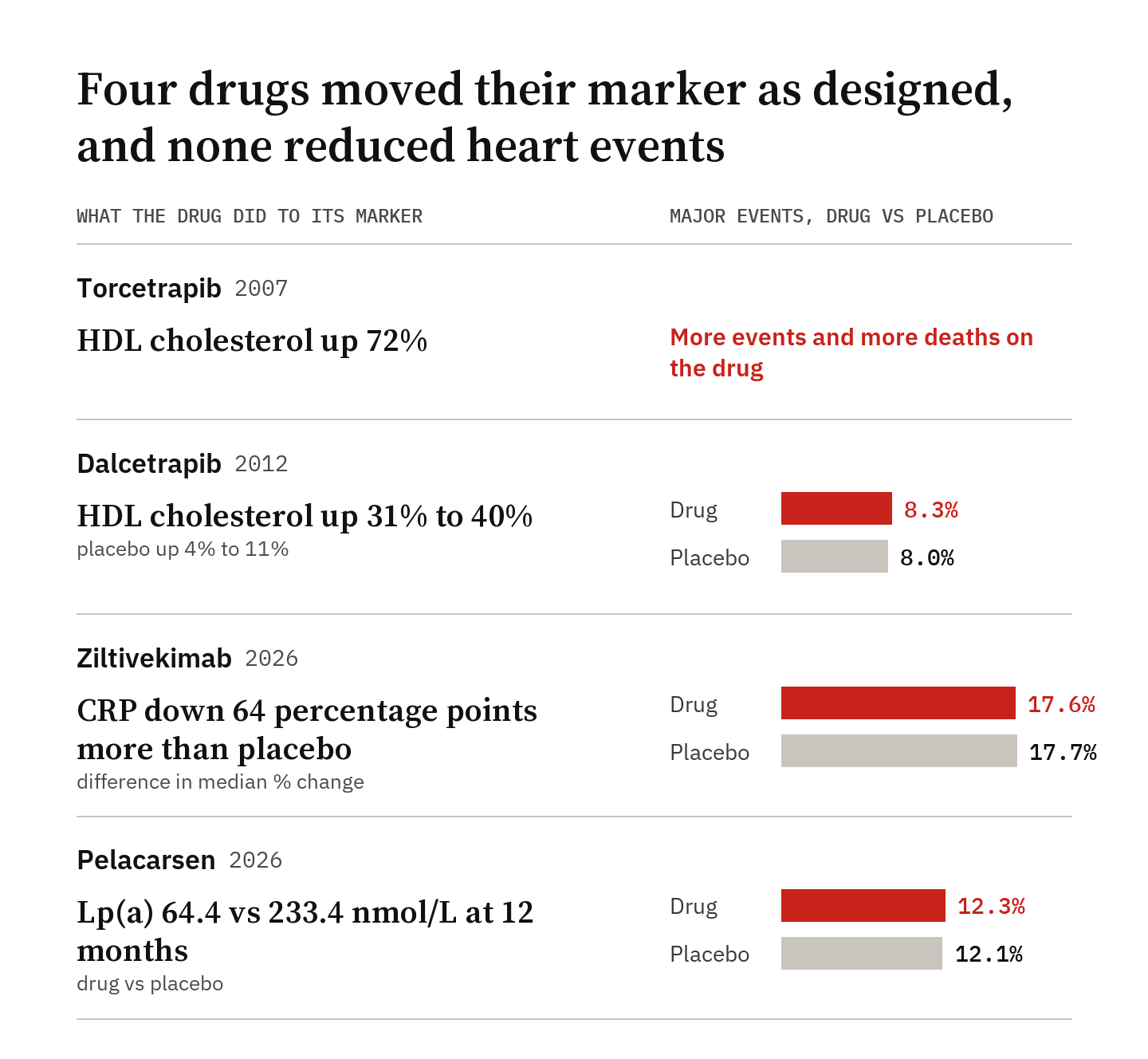
In each of the four trials, the marker moved in the direction the drug was designed to move it, by a large amount, and events stayed level or got worse. The markers themselves remain good predictors of risk across a population. What the four trials show is that a drug's effect on a predictor is a separate fact from its effect on the disease, and the second can only be learned by counting heart attacks, strokes and deaths.
How large a drop the genetics said was needed
The episode ended its genetic section with a warning that genetics can point to a pathway but cannot say what a drug will do. The Lp(a) genetics went further than pointing, because two analyses estimated how much Lp(a) would have to fall to produce a benefit worth having, and Lp(a)HORIZON checked that estimate against reality.
Both analyses compared Lp(a) with LDL cholesterol, using as a yardstick the benefit of lowering LDL by 1 mmol/L (millimoles per liter, the unit used for LDL outside the United States, equal to 38.67 mg/dL). The first, in 2018, found that the benefit tracked the absolute fall in Lp(a) rather than the percentage fall, with each 10 mg/dL of genetically lower Lp(a) bringing about 5.8% lower coronary heart disease risk, and it estimated that about 101.5 mg/dL of lowering would match the LDL yardstick. The second, in 2019, put the figure at about 65.7 mg/dL. The consensus panel later summarized the evidence as requiring "large absolute reductions in Lp(a) concentration (>50–100 mg/dL)" in a clinical trial lasting less than five years.
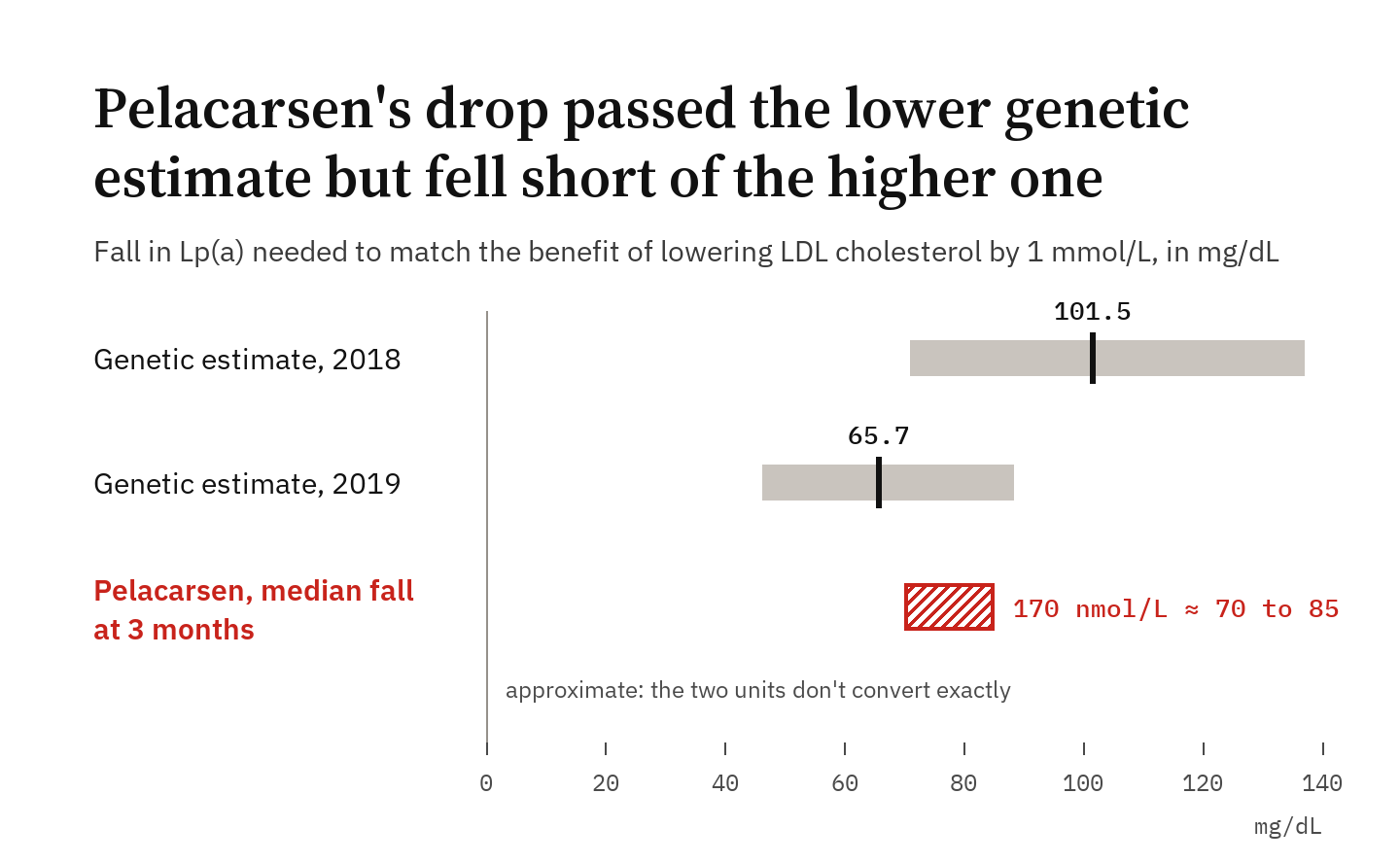
Pelacarsen's median fall was about 170 nmol/L, which is very roughly 70 to 85 mg/dL, since there is no exact conversion between the two units. That lands above the lower genetic estimate and below the higher one, inside the consensus panel's range. A drop that was simply too small therefore remains possible, but it struggles to explain why the half of patients whose Lp(a) fell the most did no better than placebo. Other explanations remain possible, and each is still a hypothesis: that patients already on modern treatment had little Lp(a)-driven risk left to remove, that lowering Lp(a) before a first heart attack might behave differently, and that newer, stronger drugs might succeed where this one did not.
What the next trials will test
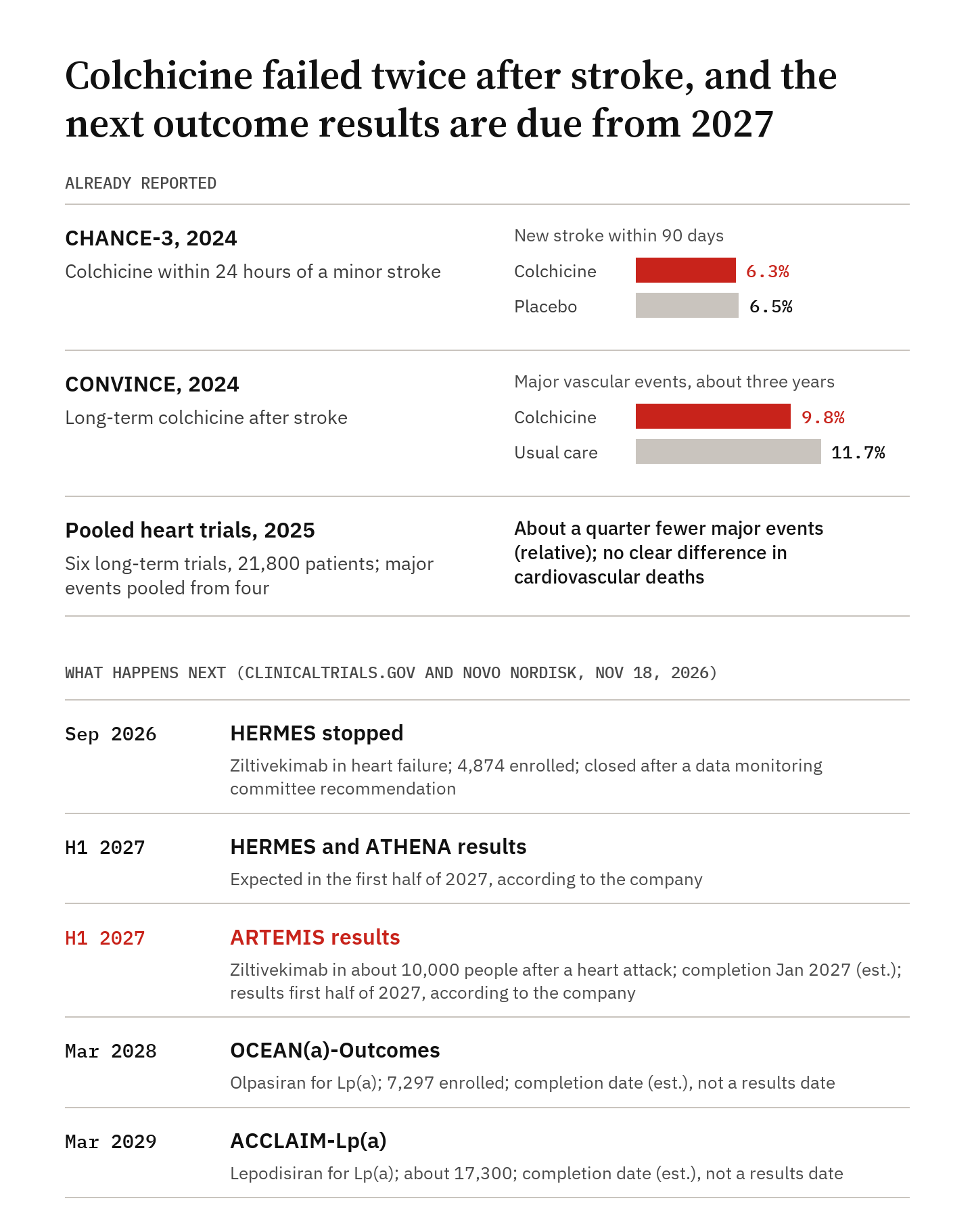
Two of those stronger drugs are already in outcomes trials. Both are small interfering RNA (siRNA) drugs, which silence the same gene by a different route from pelacarsen. OCEAN(a)-Outcomes, testing olpasiran, has enrolled 7,297 people with Lp(a) of 200 nmol/L or more, and ACCLAIM-Lp(a), testing lepodisiran, plans to enroll about 17,300 with Lp(a) of 175 nmol/L or more. The registry lists their estimated primary completion, the date the last outcome data are collected rather than a date for results, as March 2028 and March 2029. They are the next test of the explanation that pelacarsen's drop was too small.
The anti-inflammatory side has narrowed further since ZEUS. An independent data monitoring committee recommended ending ziltivekimab's two heart-failure trials. The drug's maker has closed HERMES, which enrolled 4,874 people, and reports that it did not meet its main goal, while ATHENA, a smaller trial of about 670 people, is finishing as planned. The company says results from both are currently expected in the first half of 2027. Both trials measured heart-failure outcomes rather than heart attacks, and neither has published data. The drug's remaining large outcomes test is ARTEMIS, in about 10,000 people with a first dose given within 36 to 72 hours of hospital admission for a heart attack, counting cardiovascular deaths, heart attacks and strokes. The company lists its results for the first half of 2027; the registry date of January 29, 2027 is an estimated primary completion, not a results date.
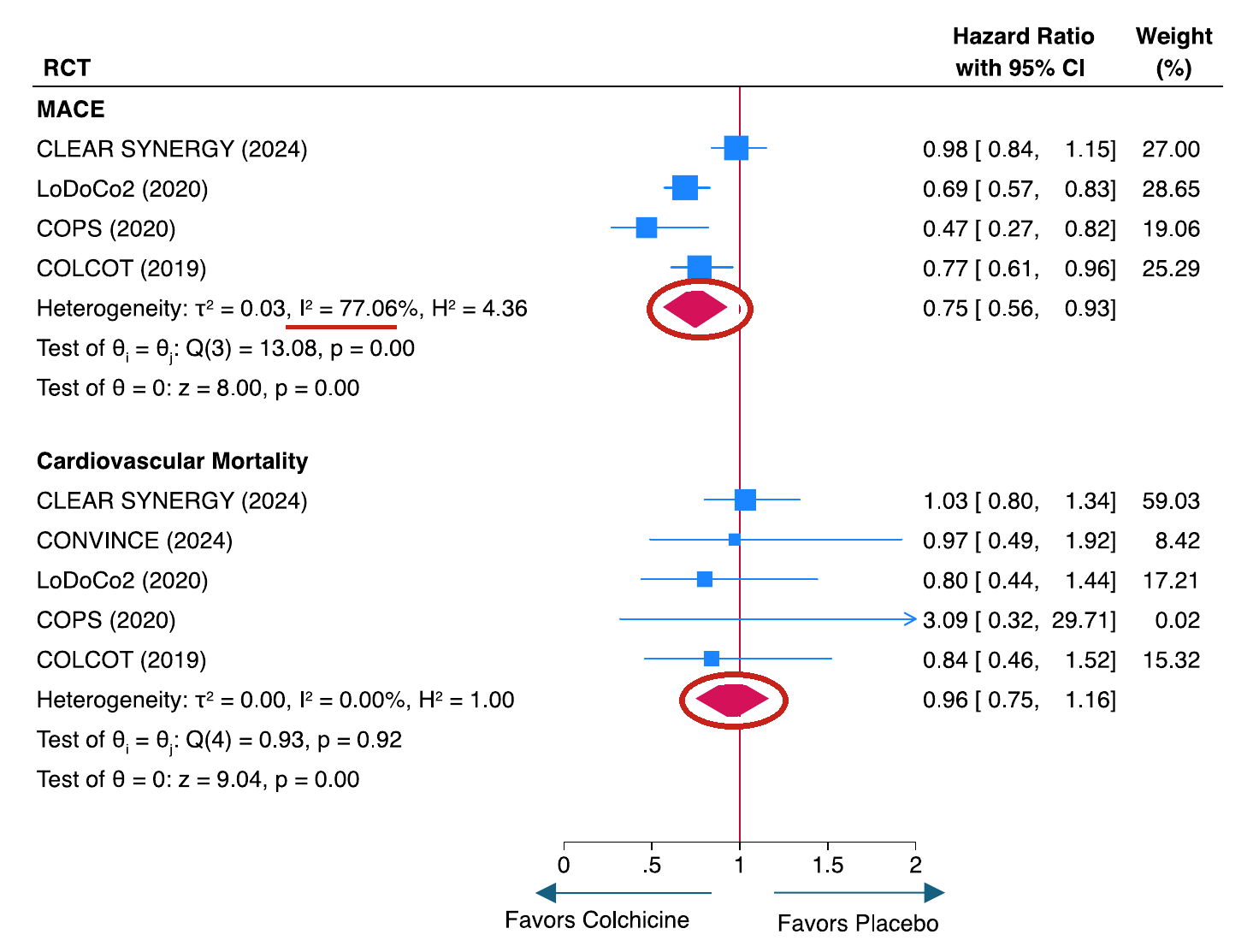
Colchicine remains the only anti-inflammatory drug approved in the United States to lower cardiovascular risk, on the strength of the heart trials covered in the episode. A 2025 pooled analysis of six long-term trials in 21,800 patients found about a quarter fewer major cardiovascular events on colchicine in relative terms, in the four trials that reported that outcome, but no clear difference in cardiovascular deaths, and the individual trials disagreed with one another far more than chance would explain. The trials that built colchicine's case also excluded people with poor kidney function, the patients ZEUS studied, so the pooled result says nothing about them. One of the pooled trials, COPS, recorded 8 deaths on colchicine and 1 on placebo among its 795 patients.
After stroke, colchicine has now failed twice. CHANCE-3, in 2024, gave it within 24 hours of a minor stroke or transient ischemic attack (a brief, stroke-like episode that resolves) to 8,343 people in China whose CRP was at least 2 mg/L (milligrams per liter), and a new stroke within 90 days occurred in 6.3% on colchicine and 6.5% on placebo. The trial selected patients by CRP but never measured it again, so it cannot show whether the drug lowered inflammation at all. CONVINCE, also in 2024, gave long-term colchicine to 3,154 people after a stroke not caused by a clot from the heart. Major vascular events occurred in 9.8% on colchicine and 11.7% on usual care alone over about three years, with no clear difference, in a trial that was open-label (patients knew their treatment) and ended early because of budget limits during the COVID-19 pandemic.
What this means for you
High Lp(a) is still a genuine, inherited warning sign, and nothing in Lp(a)HORIZON overturns the genetics behind it or the consensus advice to measure it at least once in adulthood. What failed was a narrower assumption: that lowering the particle with this drug, in people who already had cardiovascular disease and were already being treated for it, would deliver the protection the genetics implied. A person with a high result has learned something real about their risk, and the same consensus panel estimated how much extra LDL lowering would offset it, a treatment whose benefit has been proven in outcome trials. At 220 nmol/L, the panel's estimate was about 0.8 mmol/L of extra LDL lowering if started at age 30, and about 1.5 mmol/L if started at 60.
The broader lesson applies to any blood number, and to anything marketed on its power to change one. Torcetrapib raised HDL and was followed by more deaths, while dalcetrapib raised HDL, ziltivekimab lowered CRP and pelacarsen lowered Lp(a) without changing the rate of heart events, all in large, well-run trials. Each marker predicted risk, and in none of the four did a drug's effect on that marker predict its effect on the disease. Until a treatment is shown to reduce heart attacks, strokes and deaths, a better lab result is a hypothesis about protection rather than evidence of it.
The episode ended by arguing that each treatment has to prove itself by preventing heart attacks, not by lowering a marker. Lp(a) extends that conclusion beyond inflammation, to a target with stronger genetic support than CRP ever had, and it attaches dates to the next tests. ARTEMIS, which tests blocking inflammation in the first days after a heart attack, is expected by its maker to report in the first half of 2027, and the two siRNA trials are due to finish collecting outcomes in 2028 and 2029. Until those results arrive, the treatments proven to prevent heart events are still the established ones, chief among them lowering LDL cholesterol, with colchicine as an option in stable artery disease.
This week's evidence, and more like it, goes out in the newsletter This Week in Health Science. Get it every week.
Sources
- Cho L, Nicholls SJ, Frndak S, et al.; Lp(a)HORIZON Investigators. Pelacarsen and cardiovascular outcomes in patients with high lipoprotein(a). N Engl J Med. Published online November 7, 2026. doi:10.1056/NEJMoa2610159. PubMed 43001734. Primary end point hazard ratio 1.02 (95% CI 0.90–1.15), p=0.76; baseline Lp(a) ≥90 mg/dL, 1.00 (0.87–1.15), p=0.99.
- Nissen SE, Cho L, Frndak S, et al. Extended analyses of pelacarsen and cardiovascular outcomes in patients with high lipoprotein(a). NEJM Evid. Published online November 7, 2026:EVIDoa2600373. doi:10.1056/EVIDoa2600373. PubMed 42998055. On-treatment HR 0.98 (0.85–1.12); uninterrupted 1.09 (0.89–1.34); total events rate ratio 1.00 (0.87–1.14); fall ≥170 nmol/L 1.09 (0.92–1.29); achieved ≤69.5 nmol/L 1.10 (0.93–1.29).
- Kronenberg F, Mora S, Stroes ESG, et al. Lipoprotein(a) in atherosclerotic cardiovascular disease and aortic stenosis: a European Atherosclerosis Society consensus statement. Eur Heart J. 2022;43(39):3925-3946. doi:10.1093/eurheartj/ehac361. PubMed 36036785. CC BY-NC 4.0.
- Burgess S, Ference BA, Staley JR, et al. Association of LPA variants with risk of coronary disease and the implications for lipoprotein(a)-lowering therapies: a Mendelian randomization analysis. JAMA Cardiol. 2018;3(7):619-627. doi:10.1001/jamacardio.2018.1470. PubMed 29926099.
- Lamina C, Kronenberg F; Lp(a)-GWAS-Consortium. Estimation of the required lipoprotein(a)-lowering therapeutic effect size for reduction in coronary heart disease outcomes: a Mendelian randomization analysis. JAMA Cardiol. 2019;4(6):575-579. doi:10.1001/jamacardio.2019.1041. PubMed 31017618.
- Barter PJ, Caulfield M, Eriksson M, et al.; ILLUMINATE Investigators. Effects of torcetrapib in patients at high risk for coronary events. N Engl J Med. 2007;357(21):2109-2122. doi:10.1056/NEJMoa0706628. PubMed 17984165. Cardiovascular events HR 1.25 (1.09–1.44); death HR 1.58 (1.14–2.19).
- Schwartz GG, Olsson AG, Abt M, et al.; dal-OUTCOMES Investigators. Effects of dalcetrapib in patients with a recent acute coronary syndrome. N Engl J Med. 2012;367(22):2089-2099. doi:10.1056/NEJMoa1206797. PubMed 23126252. HR 1.04 (0.93–1.16), p=0.52.
- Ridker PM, Lincoff AM, Marx N, et al. Interleukin-6 inhibition with ziltivekimab for atherosclerotic disease. N Engl J Med Published online November 7, 2026. doi:10.1056/NEJMoa2612126. PubMed 43001751. HR 0.99 (0.88–1.11), p=0.84.
- Samuel M, Berry C, Dubé MP, et al. Long-term trials of colchicine for secondary prevention of vascular events: a meta-analysis. Eur Heart J. 2025;46(26):2552-2563. doi:10.1093/eurheartj/ehaf174. PubMed 40314333. CC BY 4.0. Pooled major events HR 0.75 (0.56–0.93), I²=77.1%; cardiovascular death HR 0.96 (0.75–1.16).
- Jolly SS, d'Entremont M-A, Lee SF, et al. Colchicine in acute myocardial infarction. N Engl J Med 2025;392:633-642. doi:10.1056/NEJMoa2405922. PubMed 39555823. (CLEAR SYNERGY; HR 0.99, 0.85–1.16.)
- Li J, Meng X, Shi FD, et al.; CHANCE-3 Investigators. Colchicine in patients with acute ischaemic stroke or transient ischaemic attack (CHANCE-3): multicentre, double blind, randomised, placebo controlled trial. BMJ. 2024;385:e079061. doi:10.1136/bmj-2023-079061. PubMed 38925803. HR 0.98 (0.83–1.16), p=0.79.
- Kelly P, Lemmens R, Weimar C, et al. Long-term colchicine for the prevention of vascular recurrent events in non-cardioembolic stroke (CONVINCE): a randomised controlled trial. Lancet. 2024;404(10448):125-133. doi:10.1016/S0140-6736(24)00968-1. PubMed 38857611. HR 0.84 (0.68–1.05), p=0.12.
- Novo Nordisk A/S. Company Announcement No. 65/2026: Financial report for the period 1 January 2026 to 30 September 2026. November 4, 2026, pp. 1 and 19. SEC Form 6-K.
- ClinicalTrials.gov records, accessed November 18, 2026: NCT04023552 (Lp(a)HORIZON), NCT05636176 (HERMES), NCT06200207 (ATHENA), NCT06118281 (ARTEMIS), NCT05581303 (OCEAN(a)-Outcomes), NCT06292013 (ACCLAIM-Lp(a)).
Image credits: Figure 1 from Samuel et al., Eur Heart J 2025, cropped, CC BY 4.0, with added highlights; Figure 2 (Panel C) and Figure 7 (Panel B) from Kronenberg et al., Eur Heart J 2022, CC BY-NC 4.0, with added highlights; feature image: Three examples of diseased arteries of the heart, colored lithograph by Batelli after Ferdinando Ferrari, c. 1843, Wellcome Collection, Public Domain Mark; other charts drawn from published data in Cho et al. 2026, Nissen et al. 2026, Ridker et al. 2026, Barter et al. 2007, Schwartz et al. 2012, Burgess et al. 2018, Lamina and Kronenberg 2019, Samuel et al. 2025, Li et al. 2024 and Kelly et al. 2024, the Novo Nordisk report of November 4, 2026, and ClinicalTrials.gov records.