
NOVEMBER 19, 2026
This Week in Health Science
The newest research in medicine, health tech, nutrition and supplements, and what it means for you.
This week's best research is a blood test that shows how far Alzheimer's has spread. Today's tests mostly say whether the disease is there or not. This one estimates how far tau, one of the two proteins that build up in Alzheimer's, has spread through the brain, something that right now takes a brain scan. In 728 people across four study groups, levels were about 25 to 50 times higher at the most advanced stage than at the earliest, and in about 100 people checked against brain scans it picked out who had tau buildup almost perfectly. You can't order it yet.
The news that touches you more directly is further down: faster access to your medical records, the US losing its measles-free status, and what happens to people on weight-loss drugs when their coverage disappears. This week's episode follows one heart trial from the artery wall to the result.
This week's episode of The Active Site
Is Inflammation the New Cholesterol?
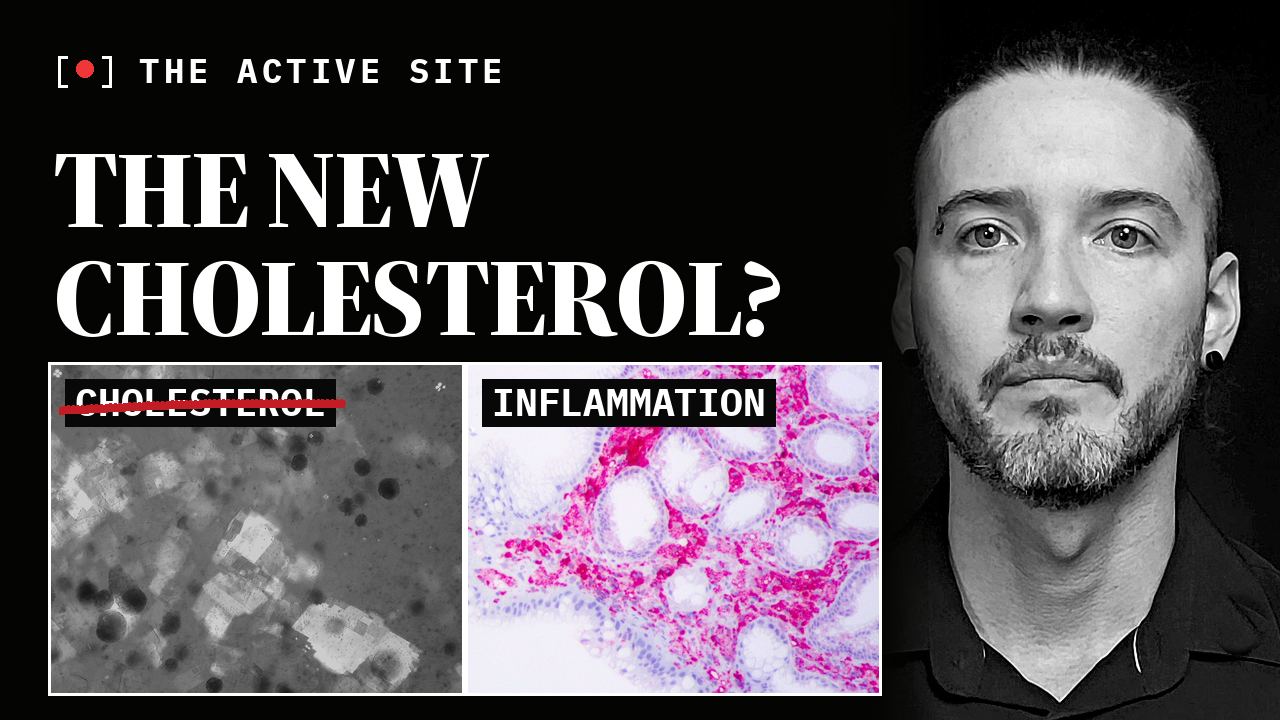
A drug calmed inflammation by two thirds. Did it protect the heart? This week's episode follows the evidence.
Or listen on Apple Podcasts or Spotify, or read it on the site.
This week's article
Cutting Lp(a) by Three Quarters Did Not Prevent Heart Attacks or Strokes
The written investigation that goes with this week's episode.
In this issue
- A blood test that shows how far Alzheimer's has spread
- The drug in Wegovy, tested in children aged 6 to 11
- Two Alzheimer's treatments missed, then pointed to smaller groups
- Longevity drugs worked best on the heaviest mice
- You'll get your medical records in 15 days, not 30
- The US has officially lost its measles-free status
- The FDA proposes to make NAC a legal supplement for good
- When Medicaid stopped paying for weight-loss drugs, most people stopped getting them
Research
1. A blood test that shows how far Alzheimer's has spread
Today's Alzheimer's blood tests mostly answer one question: is the disease there or not. This one estimates how far tau, one of the two proteins that build up in Alzheimer's, has spread through the brain. That's a big part of judging how advanced the disease is, and right now it takes a brain scan.
The numbers: 728 people in four study groups. The marker was about 25 to 50 times higher in people at the most advanced stage than at the earliest. Checked against brain scans in about 100 people, it picked out who had tau buildup almost perfectly.
The catch: each person was tested once, so it can't yet show how one person changes over time. You can't order it yet. The test's maker is among the authors.
What this means for you: nothing to do yet. It's a sign that a blood draw may soon do part of a brain scan's job.
Why it's in this issue: knowing how far the disease has spread is the next thing a blood test needs to do after saying 'you have it.'
Source: Brum et al., JAMA, Nov 16, 2026, DOI 10.1001/jama.2026.25143.
2. The drug in Wegovy, tested in children aged 6 to 11
Whether semaglutide works in young children is now answered: it does. What nobody can answer yet is what happens over a lifetime, because these children face the same choice adults do: stay on it, or likely regain the weight.
The numbers: 167 children. Two of every three got the drug and the rest got a placebo. At the trial's main checkpoint, about 16 months in, BMI (weight adjusted for height) had fallen about 13% on the drug and risen about 3% on placebo. About 4 in 10 children on the drug were no longer in the obesity range, compared with about 1 in 50 on placebo. Almost every child in both groups had some side effect, mostly stomach upset.
The catch: a small trial paid for by Novo Nordisk, which makes the drug. Treatment ran for two years, and by the end BMI was about 9% lower on the drug and about 8% higher on placebo. There's no information yet on growth, puberty or what happens after stopping.
What this means for you: for a child with severe obesity, this is now a real conversation to have with a pediatric specialist. It doesn't replace the conversation about food, sleep and movement.
Why it's in this issue: it's the youngest group yet in a trial of these drugs, and requests to approve it for this age will follow.
Source: Jastreboff et al., NEJM, Nov 16, 2026, DOI 10.1056/NEJMoa2604058.
3. Two Alzheimer's treatments missed, then pointed to smaller groups
At a major Alzheimer's meeting this week, two late-stage trials failed to help patients overall, and each company then highlighted a smaller group that did better. A result found by slicing the data after a miss is an idea worth testing, not a result worth acting on.
The numbers, AR1001 from AriBio: a daily pill tested in 1,535 people for a year. Overall, people on the pill declined no more slowly than people on a placebo. Among about 600 people not taking standard Alzheimer's drugs, the company says decline slowed by about a third, and says it planned to look at that group in advance. About 1 in 20 people on the pill stopped because of side effects, compared with about 1 in 60 on placebo.
The numbers, Spectris from Cognito: an hour a day of light and sound therapy at home, tested in 673 people for a year. It also missed overall. In about 400 people with mild disease, decline was about half as fast as with a look-alike device that delivered no therapy, but that result wasn't adjusted for how many comparisons were run. Seizures were rare but about three times as common with the real device.
The catch: neither smaller group has been tested in a trial of its own.
What this means for you: if either is offered to someone in your family, ask whether a new trial is testing that group, and wait for the answer.
Why it's in this issue: both companies are presenting these results as a path to approval, so how they're described matters.
Source: AriBio POLARIS-AD results via TechTimes, Nov 17, 2026; Cognito Therapeutics release, Nov 16, 2026.
4. Longevity drugs worked best on the heaviest mice
The Interventions Testing Program is the most trusted test of drugs that might slow aging. A new reanalysis of its mice found that a big part of what looked like slowing aging was really helping heavy, unhealthy mice live closer to a normal lifespan. If you're already lean and healthy, there's probably less for these drugs to fix.
The numbers: nearly 34,000 mice and 14 drugs. In the lightest mice, the drugs stretched typical lifespan by about 6%. In the heaviest, they stretched it by about 20%, roughly three times as much, mostly because the heavy mice that got no drug died young. The pattern showed up for 13 of the 14 drugs.
The catch: these are mice, and the study hasn't yet been checked by outside scientists. The pattern was strong in male mice and weak in females, possibly because the untreated females in this program lived unusually long.
What this means for you: when you read that a drug added 20% to lifespan, ask how healthy the untreated animals were. If you're already lean and active, expect less from any longevity drug than the mouse results suggest.
Why it's in this issue: it changes how to read almost every lifespan headline you'll see.
Source: Bouvet and Partridge, bioRxiv, Nov 11, 2026, DOI 10.64898/2026.11.10.765234.
Health news that affects you
5. You'll get your medical records in 15 days, not 30
The most practical change of the week. Getting your own records fast matters most when you're switching doctors, getting a second opinion or loading your data into a health app.
The numbers: doctors, hospitals and health plans will have 15 days to answer a request for your records, down from 30, with one extension of up to 30 days. The rule also covers sending records to someone you name or to a health app, when electronic copies have to be free, and posting what copies cost.
The catch: HHS issued the rule Nov 16. It takes effect in January, but doctors, hospitals and health plans have until July 17, 2027 to comply, so expect the 15-day limit by mid-2027. HHS's summary doesn't spell out exactly when copies are free.
What this means for you: the 30-day clock still applies for now, so ask early and ask for electronic copies.
Why it's in this issue: no health app or AI tool is much use without your own data, and this makes it faster to get.
Source: HHS Office for Civil Rights, final rule summary, Nov 16, 2026.
6. The US has officially lost its measles-free status
Being measles-free doesn't mean zero cases. It means no single chain of spread lasts a full year. The commission that tracks measles across the Americas found that one chain here has run since January 2025, so the US no longer counts as measles-free.
The numbers: more than 5,000 cases so far this year, more than twice last year's total. About 24 of every 25 cases were in people who were unvaccinated or whose status wasn't known. Ten people have died by state counts; the CDC lists six. About 1 in 13 kindergartners isn't fully vaccinated against measles, up from about 1 in 20 six years ago, and in nearly 20 states it's more than 1 in 10. Canada lost its status last year.
The catch: the real number of cases is almost certainly higher than reported.
What this means for you: if you can't confirm you've had two doses of the MMR vaccine, ask your doctor about a blood test to check your immunity, or a booster. It's one of the cheapest fixes in medicine.
Why it's in this issue: it's the biggest public health reversal of the year, and it came from falling vaccination rates.
Source: STAT, Nov 17, 2026; Contagion Live, Nov 14, 2026.
7. The FDA proposes to make NAC a legal supplement for good
This would end a four-year fight over NAC (N-acetylcysteine), a popular supplement the FDA had said didn't legally count as one because it was first approved as a drug. The bigger news is how: the FDA would start an official list of ingredients allowed in supplements, with NAC first and room for more.
The numbers: the FDA reviewed 41 studies using up to 9,000 mg a day, about 7 to 15 times the usual 600 to 1,200 mg, for as long as three years, and rated the safety concern minimal. The main side effect was stomach upset.
The catch: it's a proposal, not final. A safety review also says nothing about whether NAC does anything for you.
What this means for you: NAC isn't leaving the shelf, and typical doses sit well within what the FDA reviewed. Whether you should take it is a separate question.
Why it's in this issue: the new list gives the FDA a way to settle other disputed supplement ingredients the same way.
Source: Federal Register document 2026-23351, docket FDA-2025-N-2699; Nutritional Outlook, Nov 16, 2026.
8. When Medicaid stopped paying for weight-loss drugs, most people stopped getting them
Four states stopped covering drugs like Wegovy and Zepbound for weight loss through Medicaid on Jan 1. A new study shows what happened next, and the lesson is simple: coverage, not demand, decides who stays on these drugs.
The numbers: in California, New Hampshire, Pennsylvania and South Carolina, about 6 of every 7 of these prescriptions disappeared between the end of 2025 and the first months of 2026. In 10 states that kept paying, prescriptions dipped only slightly. The authors estimate that roughly 175,000 to 525,000 fewer people are on the drugs.
The catch: the study counts prescriptions, not people, and it can't show what happened to anyone's weight or health afterward.
What this means for you: if you're on one of these drugs through any insurance, check your 2027 coverage now, before open enrollment closes. Stopping suddenly usually means regaining weight.
Why it's in this issue: employers and states are deciding next year's coverage right now, and this is what a cut looks like.
Source: Shuey et al., JAMA research letter, DOI 10.1001/jama.2026.22008; University of Pittsburgh release, Nov 16, 2026.
In brief
Apple is starting a study of up to 200,000 people on how they ask AI about their health. (Apple Newsroom, TechCrunch)
Oura agreed to buy Counsel Health, an online doctor service; the deal hasn't closed. (Oura announcement, Healthcare Dive)
England's health advisers drafted guidance backing a swallowed sponge test for people with long-term heartburn. (Cancer Research UK, NICE GID-TA11960)
What to watch
The FDA still has no confirmed leader. The White House pulled its nominee, Heidi Overton, the night before her Nov 18 Senate committee vote, and the agency has run under acting leadership since May. Whoever gets the job shapes decisions on drugs, vaccines and supplements.
NAC: public comments on the FDA's proposal close on Jan 19, 2027.
Medicare and AI: Medicare published a plan this week for how it might one day pay for care delivered partly by AI, possibly including parts of the yearly wellness visit. Nothing changes for patients yet.
If one of these changed how you think about something you're doing now, hit reply and tell me which one. The best questions become next week's deep dive.
William
This Week in Health Science: the newest research in medicine, health tech, nutrition and supplements, and what it means for you. If someone forwarded this to you, subscribe here.